Share:
Not sure what's driving the algae in your pond?
We’d love to take a look. Reach out to TIGRIS for a consultation.
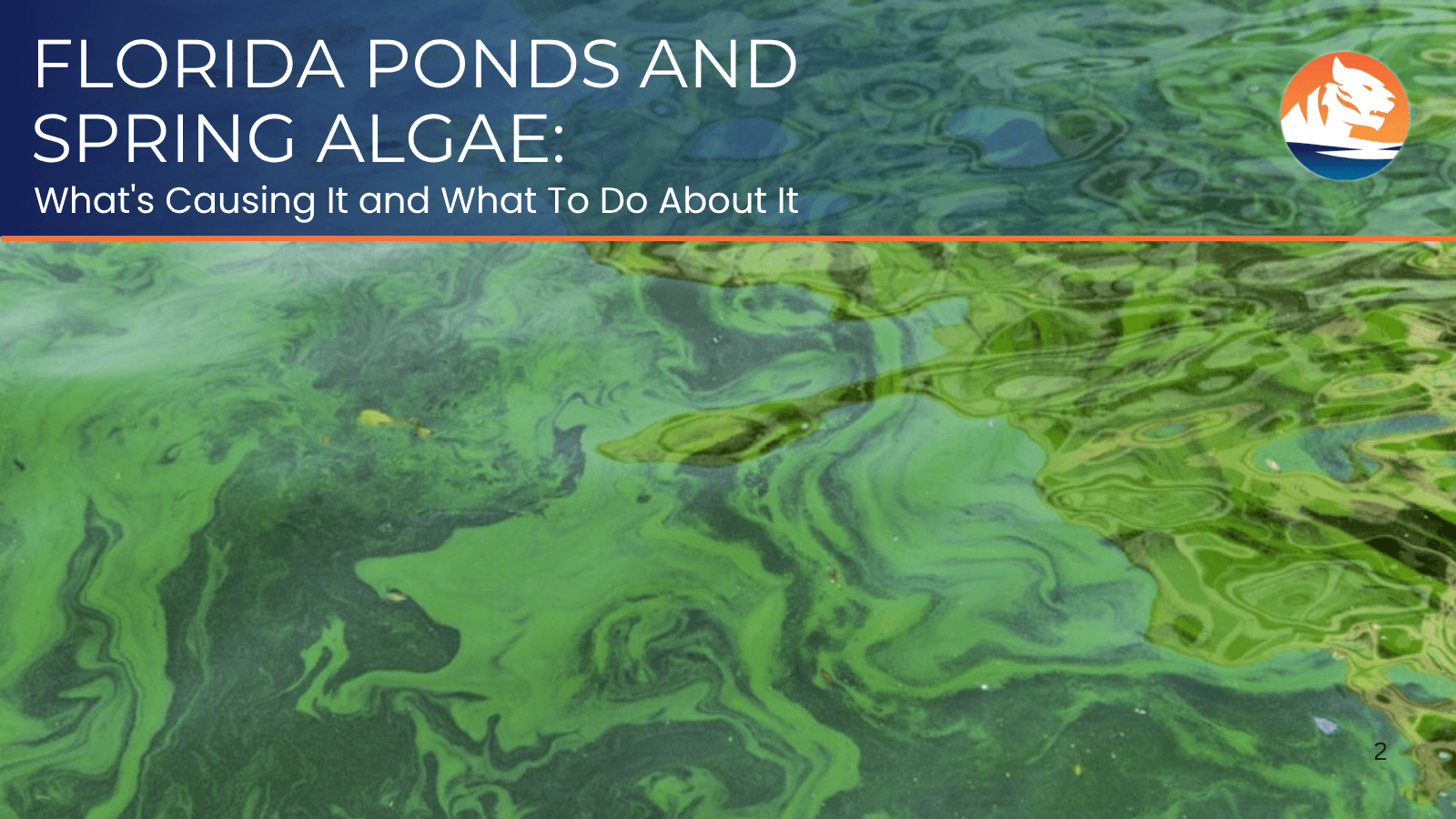
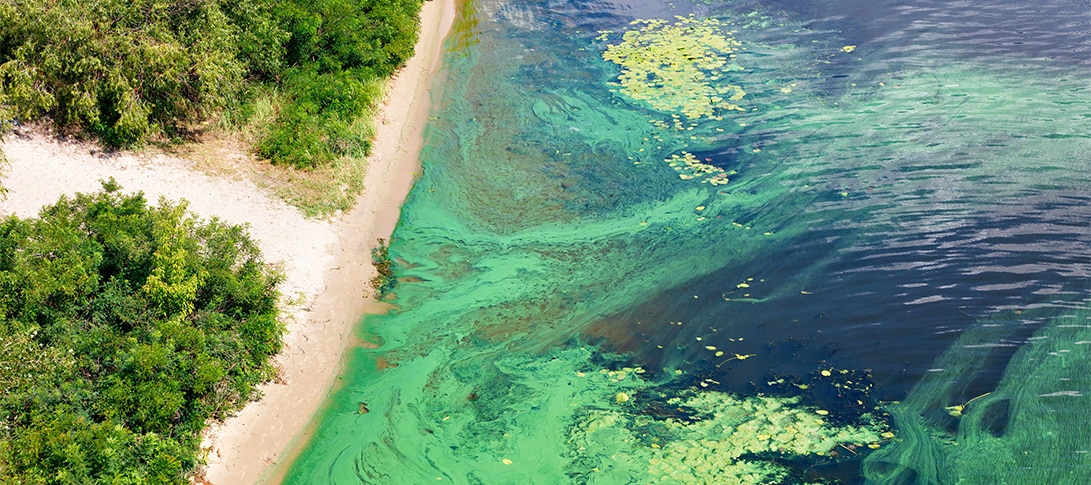
If you manage a pond or lake in Florida, algae is not a matter of if, it’s a matter of when and how bad. And spring is when it tends to make its most dramatic entrance.
At TIGRIS, we work with Florida pond owners year-round, and this time of year the conversations are almost always the same: a pond that looked fine a few weeks ago is suddenly covered in green. Understanding why that happens, and what actually works against it, is the first step toward not being that phone call.
Why Algae Loves Florida Springs
Algae isn’t random. It shows up because the conditions invite it, and Florida’s spring season checks just about every box on its list.
Nutrients are the root cause. Phosphorus and nitrogen are algae’s primary food source, and Florida ponds tend to have plenty of both. Fertilized lawns, golf course runoff, landscaping debris, and organic matter breaking down along the shoreline all contribute. These nutrients accumulate gradually and often go unnoticed, until warm temperatures and spring rains trigger a rapid flush into the water. One of the first things we look at when assessing a pond is where the nutrient load is coming from, because that shapes everything else about the management approach.
Warm water accelerates everything. Florida’s water temperatures climb earlier and faster than most places, and warm water is algae’s ideal growing environment. Combined with the intensity of Florida sunlight, even modest nutrient levels can fuel a significant bloom once temperatures are right.
Rain delivers the fuel. Spring rainfall in Florida isn’t gentle, it’s heavy and frequent. Every significant rain event washes nutrients from the surrounding landscape directly into your pond. That pulse of fresh phosphorus and nitrogen is essentially a growth signal for algae, and in Florida’s climate, the response can be fast and dramatic.
These three factors stack on top of each other every spring, which is why blooms tend to appear suddenly and spread quickly. The pond that looked fine last week can look very different after a few warm days and a couple of good rain event
What Actually Works Against It
There’s no single fix for algae, but there are three approaches that are proven effective, and they work best as part of a coordinated strategy rather than in isolation. How that strategy comes together depends on your specific pond, your nutrient sources, and what type of algae you’re dealing with, which is why a professional assessment at the start of the season pays for itself.
Nutrient Reduction
Since nutrients are the root driver, reducing what enters your pond is the most foundational step you can take. A vegetative buffer along the shoreline acts as a natural filter, capturing nutrients in runoff before they reach the water. Adjusting fertilizer use on nearby lawns and landscaping , especially heading into the rainy season, can meaningfully reduce the nutrient pulse that feeds spring blooms. Keeping grass clippings, leaves, and organic debris from piling up along the banks removes a slow but steady nutrient source as well.
These changes don’t eliminate algae on their own, but they remove the fuel that allows blooms to escalate. When we build a management plan for a Florida pond, nutrient source identification is always one of the first conversations we have, because treating algae without addressing what’s feeding it is just managing symptoms.
Algaecide Treatments
When a bloom is already present or visibly developing, targeted algaecide treatments are the most direct tool available. Applied correctly, they work quickly and can bring an active bloom under control before it spreads further.
The important word there is correctly. Algae species vary, and different products work better against different types. Concentration, timing, and application method all affect both the effectiveness of the treatment and the risk of unintended consequences, an overly aggressive treatment can actually deplete oxygen as dying algae decomposes, trading one problem for another. This is one of the areas where we see the most well-intentioned DIY attempts go sideways. Getting a professional set of eyes on what you’re dealing with before treating saves time, money, and a lot of frustration.
Beneficial Bacteria and Bioaugmentation
This is the approach that doesn’t get enough attention, and for Florida ponds in particular, it’s one of the most valuable long-term tools available.
Beneficial bacteria occur naturally in pond water and play a critical role in breaking down excess nutrients, the same nutrients that feed algae. In most managed ponds, natural bacterial populations simply aren’t large enough to keep pace with the incoming nutrient load. Bioaugmentation addresses that gap by introducing concentrated bacterial cultures that accelerate nutrient breakdown at the source. Over time the result is a pond with a lower baseline nutrient level, one that’s less hospitable to algae season after season.
For Florida pond owners dealing with recurring blooms year after year, adding a bacterial treatment program is often the piece that finally breaks the cycle. It’s also one of the more cost-effective tools in the long run, which is why we include it in most of the management plans we put together for Florida clients.
Let's Take a Look at Your Pond
Every waterbody is different. Different nutrient sources, different algae types, different shoreline conditions. A management approach that works well for one pond may not be the right fit for another, and a plan that’s missing one of the three pieces above is usually only partially effective.
TIGRIS specializes in Florida pond and lake management, and we’re happy to start with a simple conversation about what you’re seeing and what might be driving it. No complicated process, just a straightforward assessment of your pond and an honest recommendation for what makes sense.
If spring algae has been a recurring headache, or you just want to get ahead of it this year before it has a chance to take hold, reach out. That first conversation is free, and it’s usually where the answers start.
Putting It All Together
The most effective algae management in Florida isn’t one thing, it’s the combination of reducing nutrients at the source, treating active blooms precisely when needed, and building up the biological capacity of your water to resist future growth. Miss one of those pieces and you’re usually only getting partial results.
The other thing we tell pond owners consistently: the earlier in the season you start, the less work each of these approaches has to do. Waiting until the bloom is visible means you’re already playing catch-up.