Share:
Ready To Get Ahead Of Spring? Let's talk.

Contact TIGRIS About Your Aeration System Today!
You made it through winter. Your pond made it through winter. But here’s the thing, just because the ice is melting and the temps are climbing doesn’t mean your water is in the clear. In fact, for a lot of lakes and ponds across the Midwest, Northeast, and Southeast, spring is when things can go sideways fast.
Here at TIGRIS, the calls start picking up right around this time of year. And almost always, the conversation starts the same way: “I don’t know what happened, everything seemed fine and then suddenly…”
Most of the time, what “suddenly happened” was entirely preventable. And the solution is simpler than you might think.
What Your Pond Was Doing All Winter
While you were inside staying warm, your pond was going through some significant changes, and not all of them good.
Under ice or just sitting cold and still, the bottom layers of your water become starved of oxygen. Organic matter – leaves, dead algae, fish waste, it piles up and slowly decomposes down there, releasing gases like hydrogen sulfide that are genuinely toxic to fish. It’s essentially the world’s least pleasant slow cooker. Everything’s been building up all winter, just waiting for spring to arrive.
And here’s where it gets tricky: when that warm spring sun starts hitting the water and temperatures rise, the layers that have been sitting separately all winter begin to mix. That’s called turnover – and when it happens, all that cold, oxygen-poor, gas-laden water from the bottom gets swept up into the rest of the water column. Dissolved oxygen crashes. Fish suffocate. And you end up with the same scene we described in our fish kills blog – floating fish and a lot of unanswered questions.
The good news? This one’s almost entirely preventable. But you have to act before spring really gets rolling.
The Case For Getting Your Aerator Running Early
Think of your aeration system as the thing that keeps your pond from ever getting into that dangerous stratified state in the first place. By continuously circulating water from the bottom up, all winter and into spring, you’re preventing those distinct layers from forming. No stratification means no dramatic turnover event. No turnover means no oxygen crash. No oxygen crash means no dead fish on your Tuesday morning walk.
We always tell people: don’t wait until the ice is fully off to start your system. Early is always better. By the time you see the problem, the oxygen levels have already dropped.

Spring Runoff: The Algae Situation Nobody Wants to Talk About
Here’s the other thing happening every spring that doesn’t get enough attention: runoff.
All winter long, phosphorus and nitrogen have been building up in the surrounding landscape – from lawns, farm fields, even just decomposing leaves. When spring rains arrive, all of that washes directly into your pond. And those nutrients? They’re basically a five-course meal for algae.
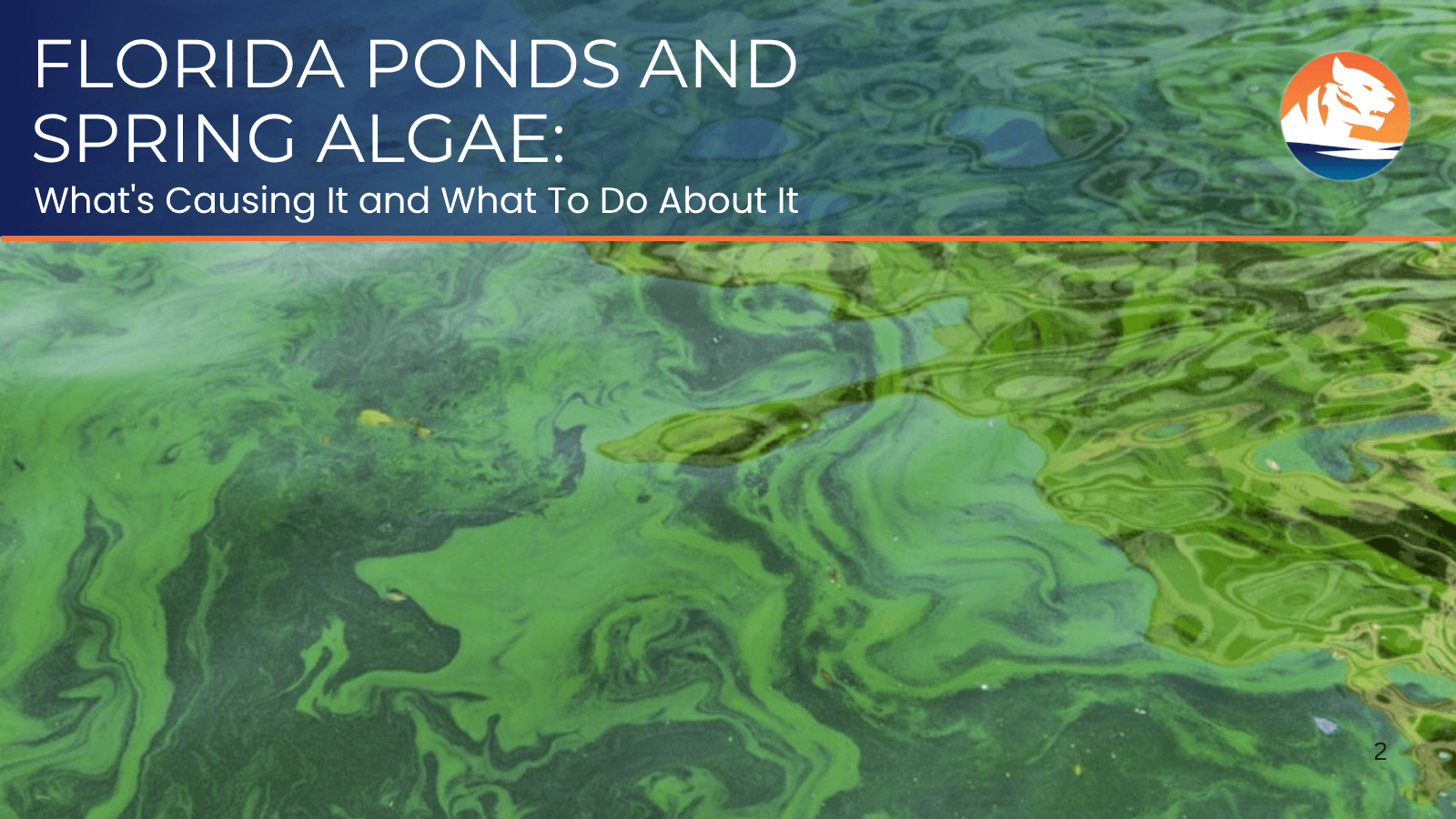
Combine that with rising water temperatures and increasing sunlight, and you’ve got the perfect recipe for those thick, noxious algae blooms that show up every year and make people wonder if their pond is dying.
Here’s where aeration does something really elegant: it powers up the beneficial bacteria already living in your water. These are the good guys, they break down excess nutrients, digest that muck layer at the bottom, and essentially outcompete algae for the fuel it needs to grow. But they need dissolved oxygen to do their job.
More oxygen → more beneficial bacteria → fewer nutrients → less algae. It really does come down to that.
It Depends On Where You Live Too
The Bigger Picture
Because, as we’ve said before, your pond’s problems look a little different depending on your zip code.
Midwest & Northeast: After months under ice, your water has been completely cut off from oxygen exchange with the atmosphere. When that ice melts, you’re not just dealing with stratification, you’re dealing with a whole season’s worth of built-up gases and depleted oxygen. Get your aeration system running as early as conditions allow. Don’t wait for a warm streak to convince you it’s “safe.” The whole point is to get ahead of the problem.
Southeast: No ice to worry about, but temperatures rise fast down south, and warm water holds significantly less dissolved oxygen than cold water. At the exact moment your water is warming up and losing oxygen capacity, your fish are also speeding up their metabolisms and demanding more oxygen. It’s a squeeze play, and without aeration to compensate, fish lose. Early spring aeration bridges that gap and buys your ecosystem time to adjust.
Nature is always going to do its thing, but with the right aeration system and a solid management plan, there’s very little your waterbody will throw at you that we haven’t seen and solved before.
For the vast majority of managed ponds and lakes, consistent, year-round aeration is the single most impactful thing you can do for water quality. It prevents the fish kills. It keeps the algae manageable. It reduces the muck. It eliminates the stagnant smell that makes people wonder if something’s wrong. And it gives your aquatic ecosystem the foundation it needs to actually thrive, not just survive.
Spring is your window. Don’t miss it.
Bottom Line
Running your aeration system early in spring, before ice fully melts in the North, and before temps spike in the South, is the most effective way to prevent turnover fish kills, algae blooms, and water quality problems all season long.
Wondering whether your aeration system is the right fit for your waterbody, or whether it’s been doing its job? TIGRIS can help evaluate your setup and make sure you’re heading into spring on solid footing. Reach out for a consultation. We’d rather have the conversation now than after something goes wrong.