
Is Your Pond Filling In? Here's How Dredging Can Restore It.
You’ve watched it happen slowly, year after year, your pond getting shallower, murkier, choked with muck. What used to be clear water and healthy fish is now algae blooms, a foul smell in summer, and that sinking feeling every time you walk past it. If you’re a property owner, farmer, or municipal manager in the Eastern or Midwestern United States, you’re not imagining things. Your pond is disappearing.
But here’s the good news: dredging can bring it back.
What Is Pond Dredging and Why Does It Matter?
Pond dredging is the process of removing accumulated sediment, muck, and organic debris from the bottom of a water body to restore its original depth and improve water quality. Over time, stormwater runoff, agricultural activity, decaying leaves, and algae growth deposit layers of sediment that can reduce a pond’s depth by several feet per decade.
For property owners across the Midwest and Northeast, this isn’t just an aesthetic problem, it’s functional. A silted-in pond can’t hold enough water for irrigation, struggles with fish kills from low oxygen, fails to manage stormwater properly, and loses property value. One lakefront owner in central Pennsylvania told us his pond had lost nearly five feet of depth over 30 years before he finally called. “I didn’t realize how bad it had gotten until I couldn’t see the bottom in two feet of water.”
What Is Mechanical Dredging? Best for Precision Work
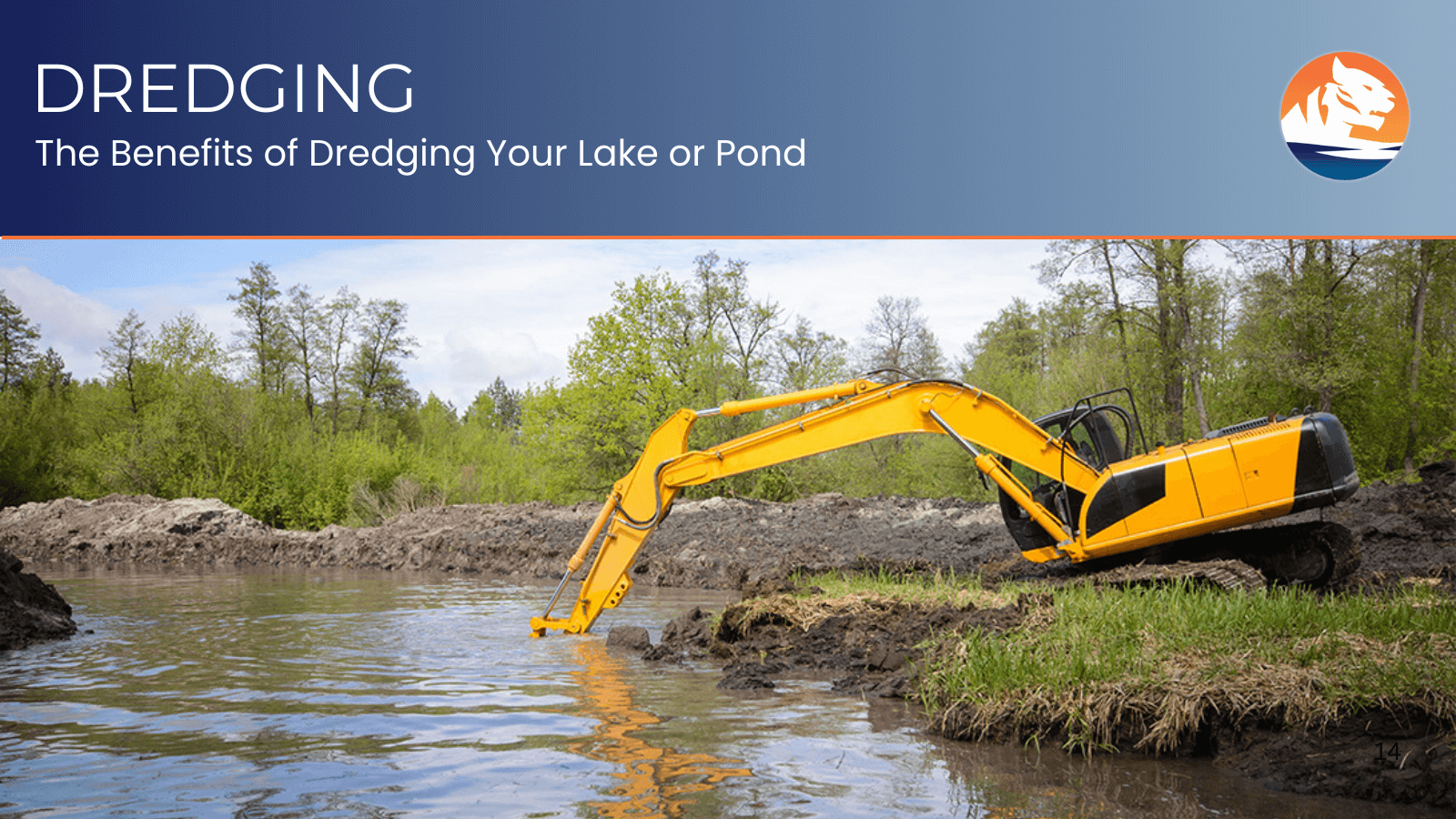
Mechanical lake dredging uses excavators, draglines, or clamshell buckets to physically scoop sediment from the bottom of a water body. It’s ideal for shallow ponds, lakes with compacted sediment, and projects near sensitive infrastructure like dams, docks, and shorelines.
This method gives you targeted control, removing exactly what needs to go, exactly where it needs to go. In the Midwest, we often use mechanical dredging for farm ponds and small reservoirs clogged with decades of agricultural runoff. In Eastern states, it’s the go-to choice for recreational lakes and urban ponds where neighbors expect minimal disruption. Projects typically run 2–4 weeks for ponds under two acres.
What Is Hydraulic Dredging? Best for Large-Scale Restoration
Hydraulic dredging is a method that pumps sediment as a slurry through pipelines to a designated disposal or dewatering area. It operates continuously, making it faster and more cost-effective for large water bodies, reservoirs, flood-control basins, and lakes with significant sediment accumulation.
Because hydraulic dredging disturbs less of the surrounding ecosystem, it’s particularly valuable for environmentally sensitive sites like wetlands, drinking water reservoirs, and water supply systems. It handles fine, nutrient-rich sediments effectively, which makes it a strong choice for Midwestern agricultural reservoirs where phosphorus and nitrogen loading fuel algae problems.
Mechanical vs. Hydraulic Dredging: Which Is Right for You?
Choosing between mechanical and hydraulic dredging comes down to your specific situation:
Choose mechanical dredging for smaller ponds (under 5 acres), compacted or debris-heavy sediment, shoreline work, and projects requiring surgical precision.
Choose hydraulic dredging for larger lakes and reservoirs, fine or loose sediments, environmentally sensitive areas, and projects where speed and continuous operation matter.
Consider a hybrid approach when your project has mixed conditions, mechanical for near-shore precision, hydraulic for the deeper, open areas.
Most pond owners we work with across Ohio, Illinois, Michigan, Pennsylvania, and New Jersey are surprised at how quickly the transformation happens. Within weeks, you’re looking at deeper, cleaner water,and wondering why you waited so long.
What Results Can You Expect From Dredging?
Professional dredging typically restores 3–8 feet of depth depending on sediment accumulation. Beyond depth, you’ll see measurable improvements in dissolved oxygen levels, reduced algae and aquatic weed growth, healthier fish populations, and extended lifespan for stormwater and irrigation systems. For municipal clients, dredging often brings aging infrastructure back into regulatory compliance without full reconstruction.
Contact Us Today For A Consultation
Whether you’re managing a farm pond in Ohio, a municipal reservoir in Pennsylvania, or lakefront property in Michigan, dredging is an investment that pays back in water quality, property value, and peace of mind. If you’re tired of watching your pond shrink and your water quality decline, let’s talk.
Find out which dredging approach makes sense for your situation. Your pond remembers what it used to be, we can help it get there again.
Related Posts

Spring Is Here!
The Importance of Spring Aeration